
1win Bet Withdrawal: Step-by-Step Guide for Malaysia
Getting winnings out of a betting account should feel straightforward. The process makes more sense once the steps, the status labels and the verification checks are laid out plainly. This page walks through how a withdrawal generally moves from request to payout, how to pick a method, and what «pending,» «processing» and «rejected» actually mean. It also covers where to find a reference ID and what to have ready if something needs support’s attention. Minimum and maximum amounts, fees and processing times shift and are best checked directly in the account’s cashier rather than assumed from a page like this one. Each figure below stays deliberately general rather than fixed.
Last reviewed: August 2026.
Key Takeaways
- A withdrawal request moves through a cashier or wallet section, gets reviewed, then pays out through the method selected, with pending and processing stages along the way.
- Cards, e-wallets and several crypto options are confirmed withdrawal methods; exact per-method limits and timing are best checked in the account itself.
- Name matching between the betting account and the payment method used is a standard part of verification across the industry, not something unique to any one platform.
- A rejected withdrawal usually points to a name mismatch, incomplete verification, or a method issue rather than anything mysterious.
- Genuine support doesn’t ask for a separate «release fee» to unlock a withdrawal, and no one with a real reason to help ever needs an OTP or password.
How a Withdrawal Works, Step by Step
Each withdrawal starts the same general way: opening the wallet or cashier section of the account, selecting withdraw, choosing a method, and entering an amount to request. Once submitted, the request typically sits with a status attached to it rather than resolving the moment it’s sent. Some form of review between request and payout is normal across betting and payment platforms generally.
After confirming the details, the account balance usually reflects the amount as reserved or pending straight away, even before the funds have actually left. From there the request generally moves into a processing stage, handled by the payment method’s own network or provider rather than by the betting platform directly. That handoff is part of why timing can vary by method instead of being one fixed number for each option.
The last step is the payment method actually receiving the funds, whether that’s a card, an e-wallet, or a crypto wallet address. Exactly how long each stage takes depends on the method and on the account’s current verification status. Both are shown inside the account rather than fixed the same way for all players. Treating the process as a short sequence, request, review, processing, payout, makes the status labels further down this page easier to read at a glance.
Choosing a Withdrawal Method
Confirmed withdrawal options include cards (Visa, Mastercard), e-wallets (Skrill, PayPal), and a range of crypto options (BTC, USDT, ETH, TRX, XRP, DOGE, LTC, DASH). Malaysian players may also be used to local rails such as DuitNow, Touch ‘n Go, GrabPay, Boost or FPX in the wider Malaysian payments market. These are mentioned here only as context for what’s common in Malaysia, not a claim about what appears in the cashier specifically. That depends on what’s currently offered inside the account itself.
A common pattern across the betting and payments industry generally is withdrawing back through the same method used for the most recent deposit. This is largely a standard anti-fraud practice rather than an arbitrary rule. Whether that applies exactly the same way for each method here is worth checking against what the cashier shows at the time of the request.
Crypto withdrawals bring their own considerations, mainly around double-checking a wallet address before confirming, since a crypto transaction generally can’t be reversed once sent to the wrong address. For the full current list of methods and any method-specific notes, the payment methods page covers that in more depth than this page needs to. It also covers how each method behaves on both deposits and withdrawals.
KYC and Name Matching, Explained Simply
KYC, short for know-your-customer, is the general term for confirming who actually owns an account before money moves out of it. This isn’t unique to any single betting platform. It’s standard practice across regulated and unregulated payment services alike, largely because it protects both the platform and the account holder from a payout going to the wrong person.
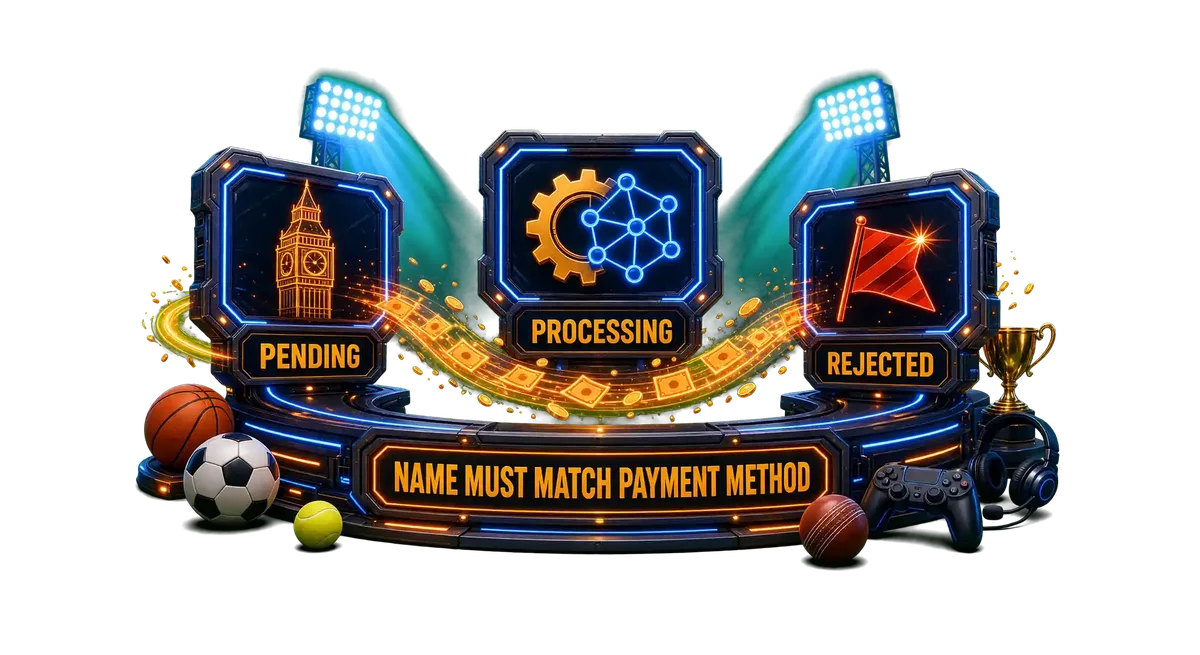
The part that trips players up most often is name matching. The name on the betting account generally needs to line up with the name registered to the card, e-wallet, or in some cases the crypto wallet being used for a withdrawal. A withdrawal requested to a payment method registered under a different name is a common source of delay or rejection across the industry generally. This isn’t something specific to any one operator.
Exactly which documents get requested, and at what stage, isn’t stated here as a fixed list. Verification requirements can change and aren’t part of the confirmed detail available here. The practical move is checking the account’s own verification section for whatever is currently being asked for. Making sure the name on file matches the name on the chosen payment method before submitting a request also matters.
Withdrawal Statuses: Pending, Processing, Rejected
«Pending» generally means the request has been submitted and is sitting in a queue waiting for review. It hasn’t been declined, it just hasn’t moved forward yet. Nothing more than that. Seeing pending shortly after submitting is normal and doesn’t by itself indicate a problem.
«Processing» usually means the request passed initial review and is being handled by the payment method’s own network, whether that’s a card processor, an e-wallet provider, or a blockchain confirming a crypto transaction. This stage is largely out of the platform’s direct hands once it starts, part of why timing can vary. That’s simply how it works.
«Rejected» or «declined» means the withdrawal didn’t go through. Common generic reasons across the betting industry include a name mismatch between the account and the payment method, verification that hasn’t been completed yet, or a method that only supports deposits and not withdrawals. Incorrect payment details, such as a mistyped card number or wallet address, are another common reason. This isn’t an exhaustive list, just the reasons that come up most often generically. The account itself usually shows a specific reason for a given rejection. Check there first.
Each withdrawal request generally gets a transaction or reference ID, usually visible in the account’s transaction history or wallet statement section. Keeping that reference number handy is the single most useful thing a player can do before raising any question about a specific withdrawal. It lets whoever is looking into it find the exact request rather than searching by date or amount alone.
What Evidence to Have Ready Before Contacting Support
Having a few specific pieces of information ready before opening a support conversation generally makes the whole process faster. This applies whether the question is about a pending request, a rejected one, or something that looks off in the account.
Worth having on hand: the transaction or reference ID for the specific withdrawal in question, the date and roughly the time the request was made, and the exact amount. Also useful are the method used and a screenshot of the current status screen. If the issue is a payment detail mismatch, having the correct details for the intended payment method ready to confirm also helps. It moves things along faster than describing the problem from memory. Every detail helps.
None of this promises a particular outcome or timeframe. It simply gives whoever is handling the case the specific details needed to look into a specific request rather than a general description. For direct contact options and current support channels, the support page is the place to go.
Limits, Fees and a Warning About Fake «Release Fee» Requests
Minimum and maximum withdrawal amounts, any fees, and processing times per method aren’t stated here as fixed numbers, since these details can change. The current figures are what actually apply, not whatever might be written on a page like this one. The cashier section of the account is the reliable place to check current limits and any fee before submitting a request.
One warning worth taking seriously: a message, call or chat may claim a withdrawal is «stuck» or «on hold.» It may ask for a separate payment, sometimes called a release fee or unlock fee, to free up the funds. This is a scam pattern that shows up across online betting and payment platforms generally, not something unique to any one operator. A genuine withdrawal doesn’t require an extra payment from the player to be released. If it’s stuck, the fix sits with support or verification, not with paying more money first.
The same caution applies to one-time passwords and account passwords: no one with a genuine reason to help ever needs either one. Typing them into a chat, email or phone call handed to someone claiming to be support is one of the most common ways an account gets taken over. Managing withdrawal habits alongside sensible limits also matters for the bigger picture around betting responsibly; the responsible gambling page covers tools and support for keeping play and spending in check.
FAQ
How long does a withdrawal generally take?
This isn’t stated here as a fixed number, since it depends on the method and the account’s verification status. The cashier section usually shows a current estimate, and that figure is more reliable than any general number stated on a page like this one.
Why would a withdrawal go to «rejected» instead of paying out?
The most common generic reasons across the industry are a name mismatch between the account and the payment method, incomplete verification, or a method that doesn’t support withdrawals. Incorrect payment details are another common reason. The account typically shows a specific reason for a specific case.
Does the withdrawal method have to match the deposit method?
Withdrawing back through the same method used for a recent deposit is a common pattern across betting and payment platforms generally, largely as a standard anti-fraud practice. Whether it applies exactly the same way in a given case is worth checking against what the cashier shows at the time.
Where do I find the reference ID for a specific withdrawal?
It’s generally visible in the transaction history or wallet statement section of the account, attached to each individual request.
Is there a minimum or maximum withdrawal amount?
Limits exist in some form on essentially all betting platforms, but the exact current figures aren’t stated here as fixed numbers since they can change. The cashier is the place to check what currently applies.
Someone is asking me to pay a «release fee» to unlock my withdrawal, what should I do?
Don’t pay it. This is a known scam pattern, not a genuine part of any withdrawal process. Contact support directly through the account rather than through whoever reached out asking for the payment. Don’t share an OTP or password with anyone in the process.
For context, 1win operates under a Curacao gaming license, a real regulatory framework separate from government approval specific to Malaysia. That’s a platform-wide point rather than anything specific to withdrawals themselves.